
|
Cam Maloney
How to Boost Radiator Efficiency (and Avoid Common Heating Mistakes That Increase Your Bills)
With UK energy costs fluctuating and the drive toward greener heating growing stronger, improving the performance of your home heating system has never been more important. Radiators remain one of the most widely used heating methods across the country, yet many households overlook simple steps that can dramatically increase their efficiency. When left unchecked, radiators can waste energy, push bills higher, and put extra strain on boilers and pumps.
In this guide, we’ll cover effective ways to maximise radiator efficiency, highlight common pitfalls that increase heating costs, and introduce infrared heating panels as a highly efficient modern alternative that can improve comfort and reduce energy expenditure.
Why Radiator Efficiency Is So Important
As energy prices continue to rise, an inefficient heating system can make a significant difference to household costs. Heating accounts for the largest portion of home energy consumption, meaning even small efficiency improvements can have a noticeable impact on monthly bills. Poorly performing radiators also contribute to cold patches, uneven room temperatures, and additional pressure on your boiler—potentially shortening its lifespan and increasing repair expenses.
Understanding how to get the most out of your radiators plays an important part in reducing unnecessary energy use and supporting broader environmental goals. Every bit of wasted heat contributes to higher carbon emissions, so improving radiator efficiency—or switching to a more efficient technology such as infrared—can help reduce your home’s environmental impact.
Tips for Improving Radiator Efficiency
Bleed Radiators Frequently
One of the quickest and most effective ways to improve radiator performance is to bleed them regularly. Over time, air can become trapped inside radiators, preventing hot water from circulating fully. When this happens, the top of the radiator stays cold while the bottom heats up—reducing overall heat output.
Bleeding a radiator allows trapped air to escape and restores full water flow. Simply turn off your heating, open the bleed valve with a radiator key, and close it once water starts to appear. This small maintenance task can dramatically increase heating efficiency.
Optimise Radiator Valves for Better Control
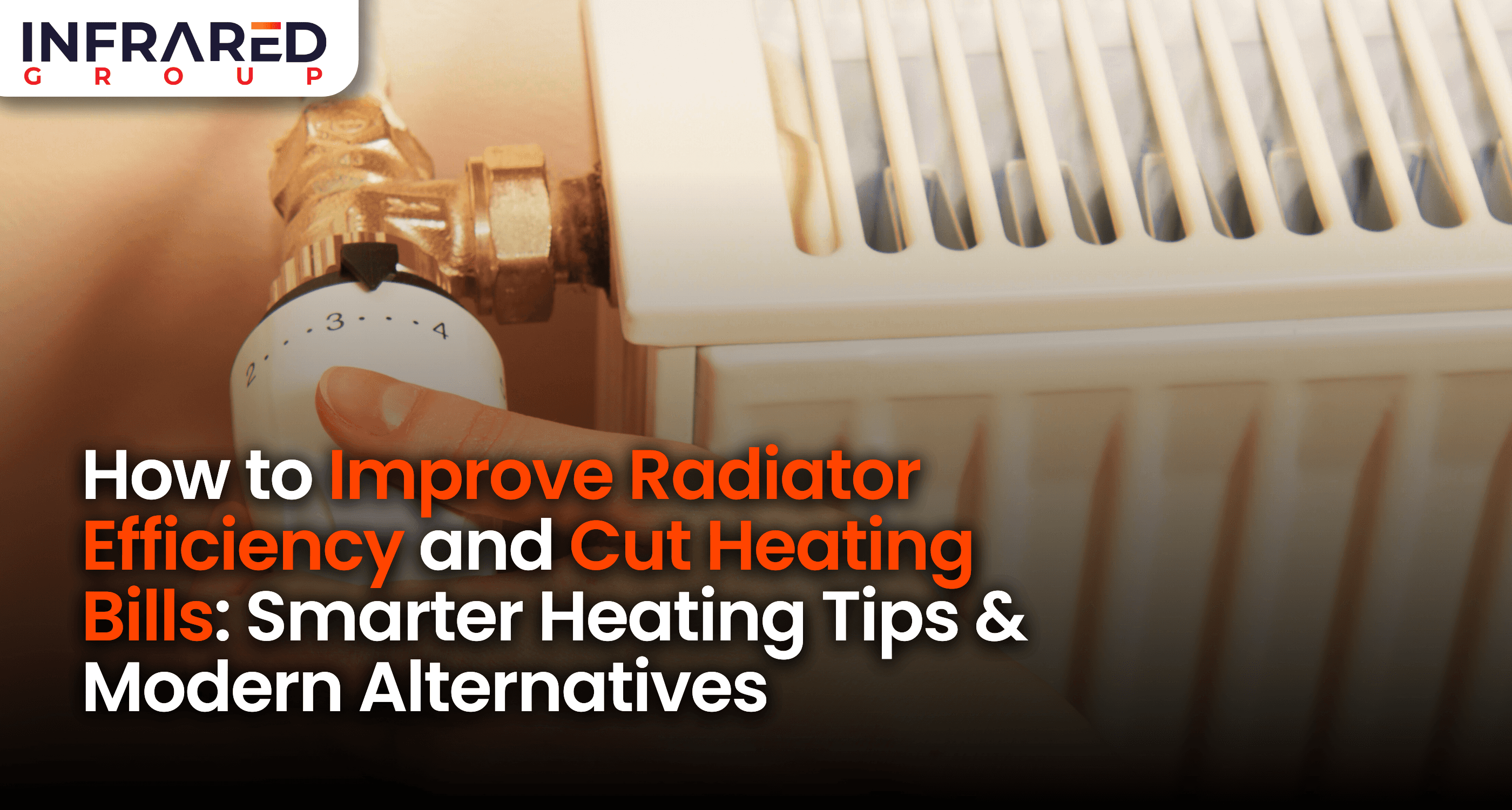
Radiator valves help regulate heat output. Thermostatic Radiator Valves (TRVs) are especially useful because they allow you to control the temperature of each radiator individually. Adjusting TRVs so that seldom-used rooms stay cooler can save a considerable amount of energy without affecting comfort in the rooms you use most.
Keep One Radiator Running as a Bypass
It’s important to leave one radiator permanently on to allow pressure within the system to escape. While some modern boilers include an automatic bypass valve, older systems may not. Keeping one radiator open prevents pressure build-up and reduces stress on your boiler and pump.
This simple measure supports smoother system operation and can help extend the life of your heating equipment.
Ensure Radiators Have Space to Radiate Heat
Radiators work best when heat can circulate freely. Furniture, curtains, or decorative items placed in front of radiators can block heat from spreading throughout the room, causing the heating system to work harder.
Keeping radiators clear ensures better room heating and reduces the time needed to achieve a comfortable temperature—ultimately lowering energy use.
Install Radiator Reflective Foil to Reduce Heat Loss
Radiators positioned on exterior walls can lose substantial heat through the wall itself. Placing reflective radiator foil behind the radiator helps bounce warmth back into the room instead of allowing it to escape. This is especially effective in older homes with lower insulation levels.
Radiator foil is cheap, easy to install, and can significantly reduce heat loss.
Balance Your Radiators for Even Heating
If some rooms consistently heat up faster than others, your system may need balancing. Balancing ensures that each radiator receives the correct amount of hot water.
This typically requires adjusting the lockshield valves and may be best handled by a heating engineer. Once balanced, your home will heat more evenly and more efficiently.
The Common Radiator Mistake That Raises Energy Bills
Many households unknowingly waste energy by turning every radiator up high, even in rooms that are rarely used. Heating your entire home to the same level is inefficient and unnecessary, especially if certain rooms are empty most of the day.
Another costly mistake is failing to service your boiler annually. A poorly maintained boiler becomes less efficient over time, consuming more energy to deliver the same level of heat. Regular servicing helps maintain peak performance and prevents breakdowns.
Infrared Heating Panels: A Smarter Alternative to Traditional Radiators
Traditional radiators remain effective, but their reliance on convection heat makes them less efficient than modern alternatives. Infrared heating panels are rapidly gaining popularity thanks to their exceptional efficiency, low running costs, and compatibility with sustainable living.
How Infrared Heating Works
Infrared heating operates very differently from radiator systems. Instead of heating the air, infrared panels heat objects, walls, and people directly using radiant heat. This is the same natural form of warmth we experience from the sun.
This direct heating method avoids the energy losses associated with convective systems, delivering heat more quickly and more efficiently.
Fast Warm-Up Times with Reduced Energy Use
Infrared panels deliver heat within seconds, compared to the 20–30 minutes radiators typically need to reach full temperature. Because infrared panels require up to 42% less wattage than convection radiators, households benefit from lower electricity consumption and reduced energy bills.
When paired with smart controls and timers, infrared panels can provide heat exactly when and where it’s needed.
Why Infrared Heating Reduces Bills
Infrared heating reduces heat loss and directs warmth precisely where it's required. This makes it ideal for zonal heating—warming only the rooms in use rather than relying on a central system. This targeted approach helps households minimise wasted energy and enjoy greater control over their heating costs.
Infrared vs Radiators: Which Is More Efficient?
Conventional radiators rely on convection, heating the air around the radiator and circulating it around the room. This often results in warm air rising to the ceiling and cold air staying near the floor, causing uneven temperatures and forcing the system to work harder.
Infrared panels, using radiant heat, provide even, consistent warmth, avoiding the inefficiencies of heated air. By warming surfaces directly, they create a more comfortable environment using far less energy.
Why You Might Consider Switching to Infrared Heating Panels
With the UK driving towards net zero and households seeking more sustainable alternatives, now is an excellent time to consider infrared heating. Infrared panels offer:
Lower energy consumption
Reduced heating bills
Faster heating times
Improved comfort through zonal heating
A future-proof, low-carbon solution
As the national grid continues to adopt renewable energy, electric solutions like infrared become even more eco-friendly.
Conclusion: Improving Radiator Efficiency While Exploring Better Options
By making small changes—bleeding radiators, adjusting valves, and keeping them unobstructed—you can significantly improve the performance of your current heating system. Avoiding common mistakes and keeping your boiler maintained will help reduce energy waste and lower bills.
However, if you’re looking for a more efficient, sustainable, and modern alternative, infrared heating panels offer a compelling solution. With fast heat delivery, lower energy requirements, and zonal heating capabilities, infrared provides a cost-effective upgrade that aligns with both financial and environmental goals.
Whether your aim is to save money, reduce emissions, or enjoy a more efficient home heating system, infrared heating can help you take a meaningful step toward a greener, more comfortable future.

[ Blog ]


