|
Cam Maloney
Introduction: The History of Storage Heaters in the UK
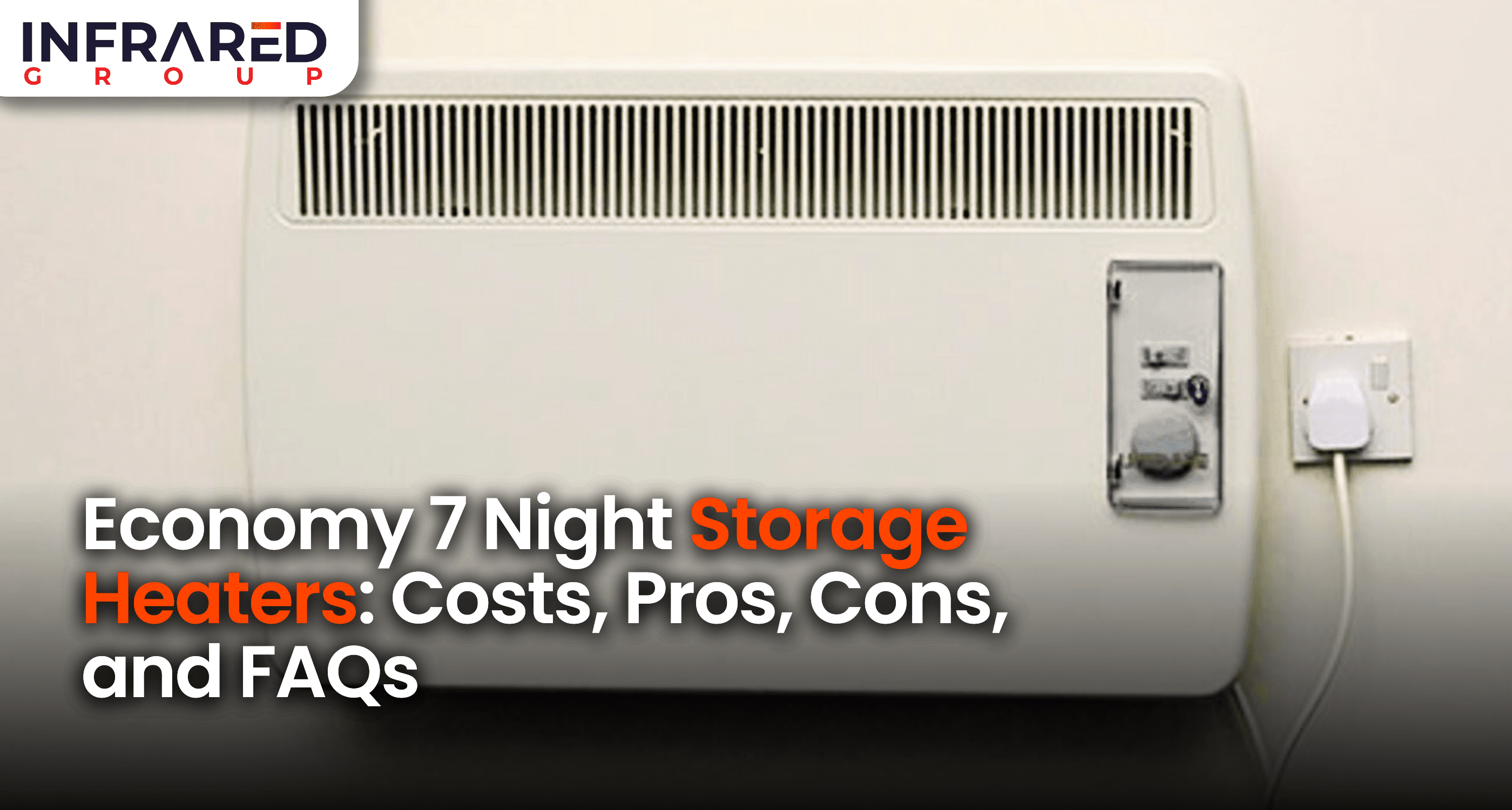
Storage heaters have been a common feature in UK homes since the mid-20th century. First introduced during the 1960s and 70s—particularly in council and social housing—they were widely promoted as an efficient way to take advantage of Economy 7 tariffs. The concept was straightforward: charge the heater overnight using cheaper electricity, then gradually release that heat throughout the day.
However, in today’s world of rising energy prices, smarter heating technology, and greater emphasis on efficiency, storage heaters are increasingly viewed as dated. This raises an important question: are night storage heaters still practical, or is it time to consider more modern alternatives?
In this guide, we’ll explore the benefits, drawbacks, costs, and best replacements for traditional storage heaters, helping you make an informed decision for your home.
What Is a Storage Heater and How Does It Work?
The Basics
A storage heater is an electric unit designed to store heat by warming internal ceramic bricks during off-peak electricity hours, usually overnight. That stored heat is then slowly released during the following day.
The Role of Economy 7
These heaters were specifically designed to work with Economy 7 (ECO7) tariffs—electricity plans providing lower rates during a seven-hour night period, typically between midnight and 7 AM. Homes using storage heaters often depend heavily on ECO7 to keep running costs manageable.
Types of Storage Heaters
1. Traditional Night Storage Heaters
Older models that warm up overnight and release heat passively during the day, offering limited control.
2. High Heat Retention (HHR) Storage Heaters
Newer, better-insulated units featuring fans, improved controls, and programmable settings—though at a far higher price.
3. Combination Units
Modern models combining storage elements with an additional electric radiator for top-up heat.
The Advantages of Storage Heaters
Lower Night-Rate Electricity Costs
When paired with an Economy 7 tariff, storage heaters can theoretically save money by charging during cheaper night-time hours.
Simple Controls
Older systems use straightforward dials that are easy to operate.
No Plumbing Required
Storage heaters rely on electricity alone, meaning no boiler, pipework, or central heating system is needed.
The Increasing Disadvantages of Storage Heaters
Poor Heat Control and Low Efficiency
Storage heaters release heat gradually, regardless of whether you need it. By evening—when most households need heat the most—much of it has already dissipated. This often leads to expensive top-up heating at peak-rate prices.
Not Suited to Modern Lifestyles
Today’s households have varied schedules. With more people working remotely or using rooms at different times, the fixed overnight-charging model of storage heaters no longer fits modern usage patterns.
Expensive to Run Overall
While night-rates are cheaper, day-time electricity costs on Economy 7 are significantly higher. Any additional heating required during peak hours quickly makes storage heaters one of the most expensive heating methods.
Bulky and Aesthetically Outdated
Traditional storage heaters are large, unattractive, and take up a considerable amount of wall space—especially compared to slimline infrared heating panels.
Ageing Systems and Poor Availability of Parts
Many storage heaters installed decades ago are nearing the end of their lifespan. Replacement parts are becoming increasingly difficult to source.
Are High Heat Retention Storage Heaters the Answer?
Manufacturers have tried modernising storage heating with high heat retention models featuring improved insulation, fans, and digital controls. But:
Units typically cost £1,500–£2,500 each
They still rely on stored heat lasting all day
They are only cost-effective on ECO7
If used incorrectly, they remain expensive to run
While more advanced than older systems, they do not fundamentally solve the issues associated with storage heating.
What Are the Alternatives?
With rising energy prices and growing importance placed on energy efficiency—especially for EPC compliance—many homeowners are upgrading to more economical and modern systems.
Electric-Only Homes: Why Upgrading Matters
Properties without access to mains gas (known as electric-only homes) often rely on outdated heating solutions such as storage heaters or old electric radiators. In some cases, homeowners turn to oil heating, which is costly, inconvenient, and requires fuel storage.
Traditional electric systems use considerably more electricity—up to 42% more—compared to efficient infrared heating panels. As energy prices continue to climb, switching to a modern heating method such as infrared can greatly reduce consumption and lower monthly bills.
Infrared Heating: A Smarter, More Efficient Upgrade
Infrared heating has become increasingly popular due to its precise, instant, and efficient heating performance.
How It Works
Infrared panels emit far-infrared waves that heat surfaces, objects, and people directly—not the air. This creates a fast, comfortable warmth with minimal energy waste.
Why It Outperforms Storage Heating
Heat When You Need It: No more charging overnight or wasting daytime heat
Lower Running Costs: Works efficiently on standard tariffs, not just ECO7
Slim, Modern Design: Panels are compact, stylish, and can be wall- or ceiling-mounted
Better Comfort: No more inconsistent hot/cold cycles
Improved EPC Ratings: Especially when combined with renewable energy systems like solar
Frequently Asked Questions About Storage Heaters
Are storage heaters being phased out?
Not officially, but they are increasingly considered outdated. Many landlords and homeowners are replacing them to improve EPC ratings and reduce running costs.
Can storage heaters run without Economy 7?
Yes, technically—but they become very expensive to operate on standard tariffs.
Is Economy 7 being phased out?
Economy 7 itself remains available, but the Radio Teleswitch Service (RTS)—which allows automatic switching between day and night rates—is being shut down by 30 June 2025.
Affected homes will need meter upgrades to maintain ECO7 functionality.
Can I replace a storage heater with infrared or an electric radiator?
Absolutely. Both offer improved efficiency, better control, and lower running costs.
Do high heat retention heaters qualify for grants?
Occasionally under ECO schemes, though focus is shifting toward more efficient technologies like infrared heating.
Conclusion: Are Storage Heaters Still Worth Keeping?
While storage heaters once played an important role—especially during the peak of Economy 7—they no longer meet the expectations of modern homeowners. With poor controllability, rising running costs, and dated design, they often end up costing more than they save.
Modern heating solutions like infrared panels provide better efficiency, improved comfort, and lower long-term costs, making them a far more attractive option for today’s homes.
Ready to Upgrade from Storage Heaters?
If you're still using storage heaters and want a more cost-effective, modern, and stylish solution, we’re here to help.
Contact Infrared Group for expert advice and a tailored quote.
📞 0333 090 7160
📧 info@infraredgroup.co.uk
🌐 www.infraredgroup.co.uk

Cam Maloney
Mr